
Boat covers & canopies
Covers that keep the sun, rain and grime off your boat
Full covers, storm and travel covers, canopies, biminis and awnings, each patterned to the boat it’s made for.
What it is
What a boat cover actually does
A cover is the fabric layer that goes over the boat while it isn’t being used, or over part of it while you’re on board. At one end is a full cover that runs down to the waterline. At the other are small covers for a console, a seat or an outboard.
Canopies, biminis and awnings do a different job. They give shade and shelter while you’re using the boat, and many can fold or zip away when you don’t need them.
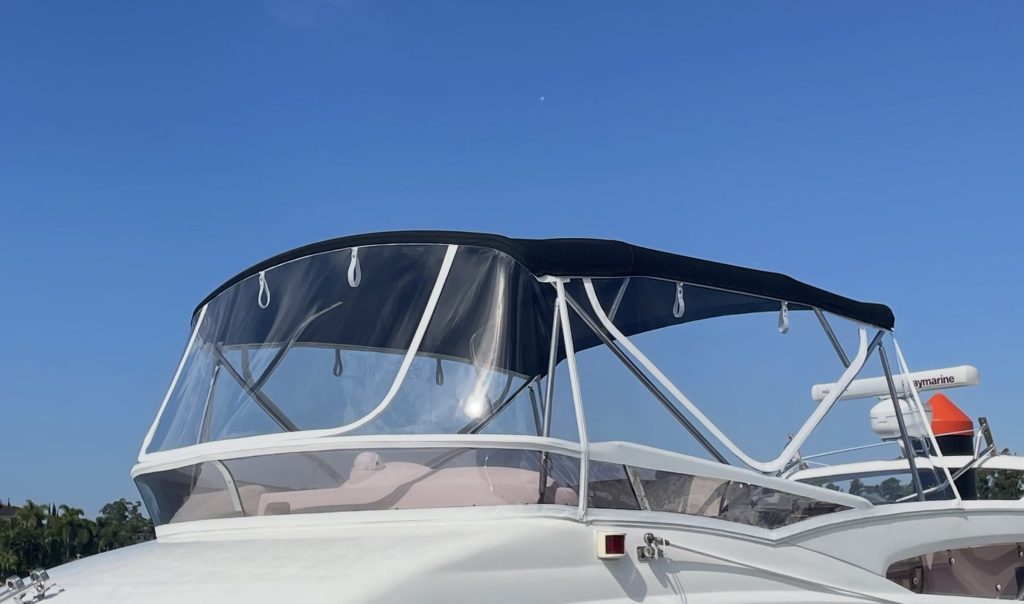
We’ve invested in technology alongside manual techniques to get the best outcome, so the cover follows the boat’s real shape, including rails, screens and fittings.
Why it's worth it
Why a good cover pays for itself in care
Sun protection
UV is the main thing that ages a boat. It fades and hardens vinyl, breaks down stitching, dulls gelcoat and dries out timber. A cover keeps most of it off.
Water kept out
A cover that sheds water stops rain collecting in the cockpit, in seat bases and in carpet, where mould and smells start.
Less cleaning
Bird droppings, dust and salt spray land on the cover instead of the deck and upholstery, so there’s less to clean before each trip.
Shade when you're aboard
A bimini, canopy or awning makes the middle of the day usable, and gives you somewhere to sit out of a passing shower.
Safer towing
A travel cover is made to stay put at road speed, so it doesn’t flog, chafe the hull or let loose gear blow out.
Options
Types of covers and canopies
Full and fitted covers
Cover the whole boat, with options such as felt rub pads where the fabric touches the hull and a drawstring at the waterline.
Storm covers
Heavier covers for boats left in exposed spots or stored for long periods.
Travel covers
Made to be towed in, and tied down so they don’t move at speed.
Canopies
Shade and weather protection while you’re on board, shaped around how the boat is laid out.
Biminis and shade tops
Fold-down shade over the helm or cockpit.
Awnings and camper covers
Extend the sheltered area at the back of the boat, with mesh screens where you want airflow.
Blockout covers
For keeping heat and UV out of an area of the boat.
Console, seat and engine covers
Smaller covers for the parts that take the most sun.
Premium materials and fittings
Solution-dyed polyester canvasSunbrellaStamoidPTFE threadYKK zipsFelt rub padsMesh screensStainless steel frames
Every cover is specified in premium marine-grade fabrics and fittings. Black canvas is a solution-dyed polyester canvas with a waterproof backing. Mesh comes in denser weaves for privacy and more open weaves for airflow, and we’ll advise which suits the boat.
Case studies
Recent cover work
Case study 01
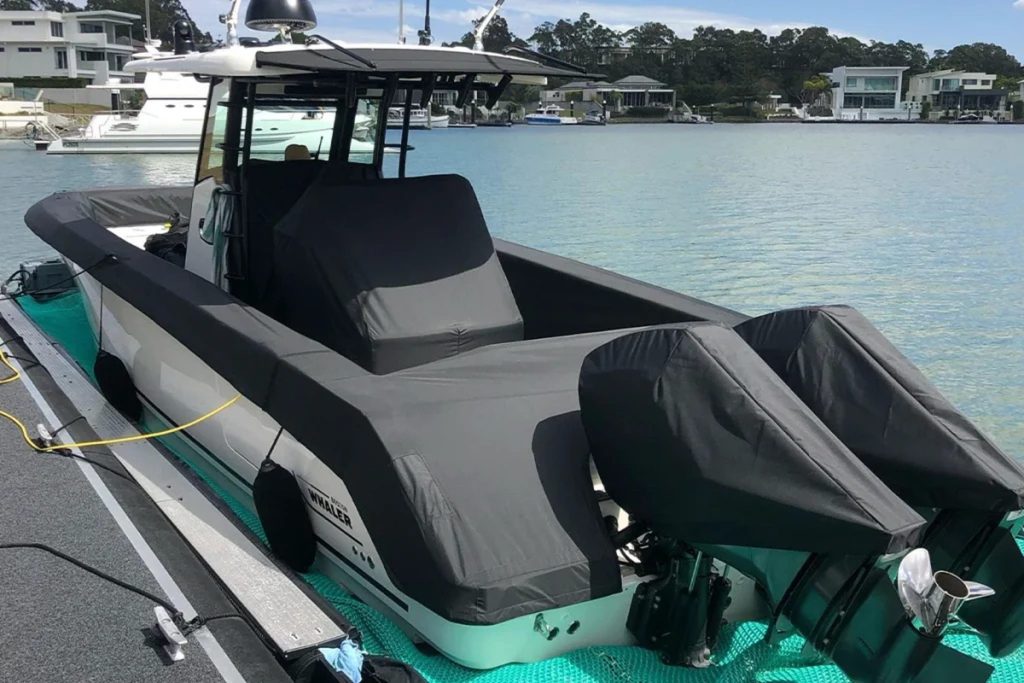
Console and engine covers for a Boston Whaler
- Boat
- A Boston Whaler centre console, kept in the water.
- What we made
- Fitted covers over the console, helm seats, cockpit and twin outboards, with matching covers along the gunwales.
- Materials
- Premium marine-grade canvas in dark grey and black. The black is a solution-dyed polyester canvas with a waterproof backing.
- Why
- Covers like these keep sun, salt and weather off the seats, electronics and engines between trips.
Case study 02
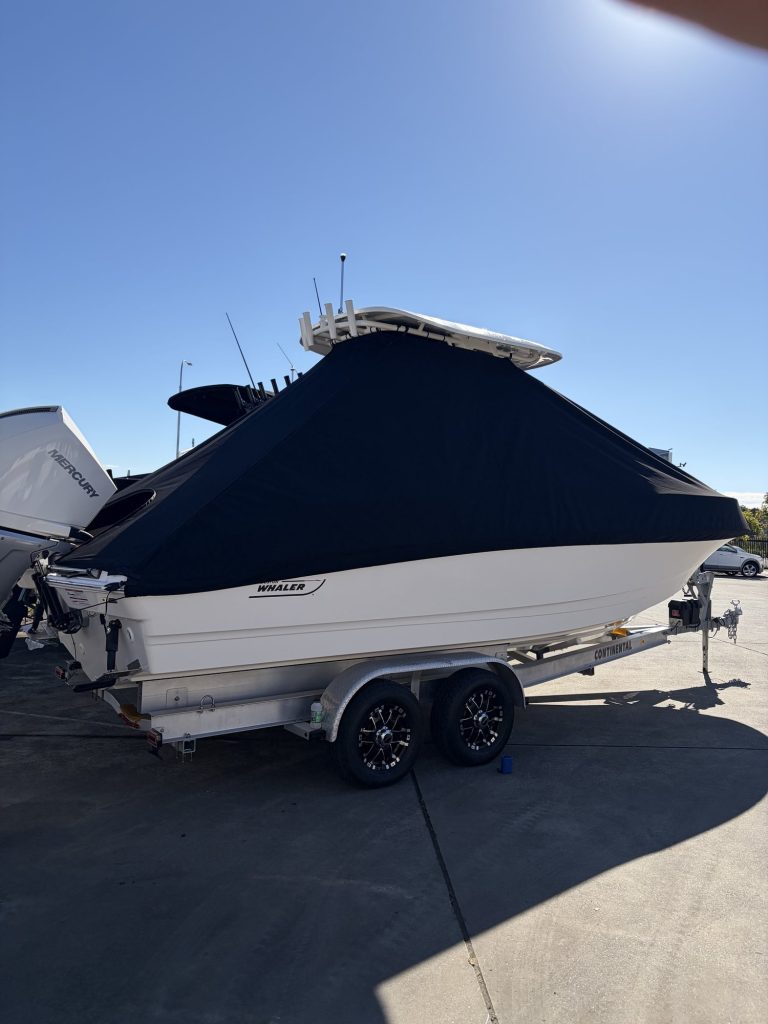
Fitted cover for a Boston Whaler
- Boat
- A Boston Whaler on a tandem trailer.
- What we made
- A close-fitting black cover over the cockpit and deck, shaped around the T-top, with the hull left clear.
- Materials
- Solution-dyed polyester canvas with a waterproof backing, in black.
- Why
- A fitted cover keeps UV, rain and dirt off the seats and deck while the boat sits on the trailer.
What to consider
Before you order a cover
Questions worth answering
- Where the boat lives: marina berth, mooring, trailer or hardstand. That decides how much needs covering.
- Whether it will be towed with the cover on.
- How often you use the boat. A cover that’s quick to fit gets used.
- Which areas cop the most sun, such as the helm, seats and engine.
Signs your cover needs replacing
- Fabric that’s faded, chalky or tears easily.
- Stitching that has split or perished.
- Water pooling on top instead of running off.
- Zips that stick, have corroded or won’t close.
- A cover that no longer pulls tight.
Questions
Boat cover questions
Full cover or cockpit cover?
A full cover protects the hull and deck as well as the cockpit, which suits boats kept on a trailer or hardstand. A cockpit or console cover is quicker to put on and suits boats used often. We'll talk it through based on how you store and use the boat.
Can I tow with my cover on?
Only if it was made as a travel cover. A storage cover can work loose or chafe at road speed.
Why does water pool on my cover?
Usually the cover has stretched or there's nothing holding the middle up. Re-tensioning, support poles or a reshaped cover can fix it, and we'll look at it when we see the boat.
How do I look after a canvas cover?
Rinse salt and dirt off with fresh water, let the cover dry before you fold it, and keep zips clean. Avoid harsh cleaners on the fabric.
Can you copy my old cover?
We can use it as a reference, but we still measure the boat so the new cover fits the boat rather than the old cover.
Covers and canopies
Get a cover made for your boat
Send us the boat’s make, model and length, and a few photos of where it’s kept.